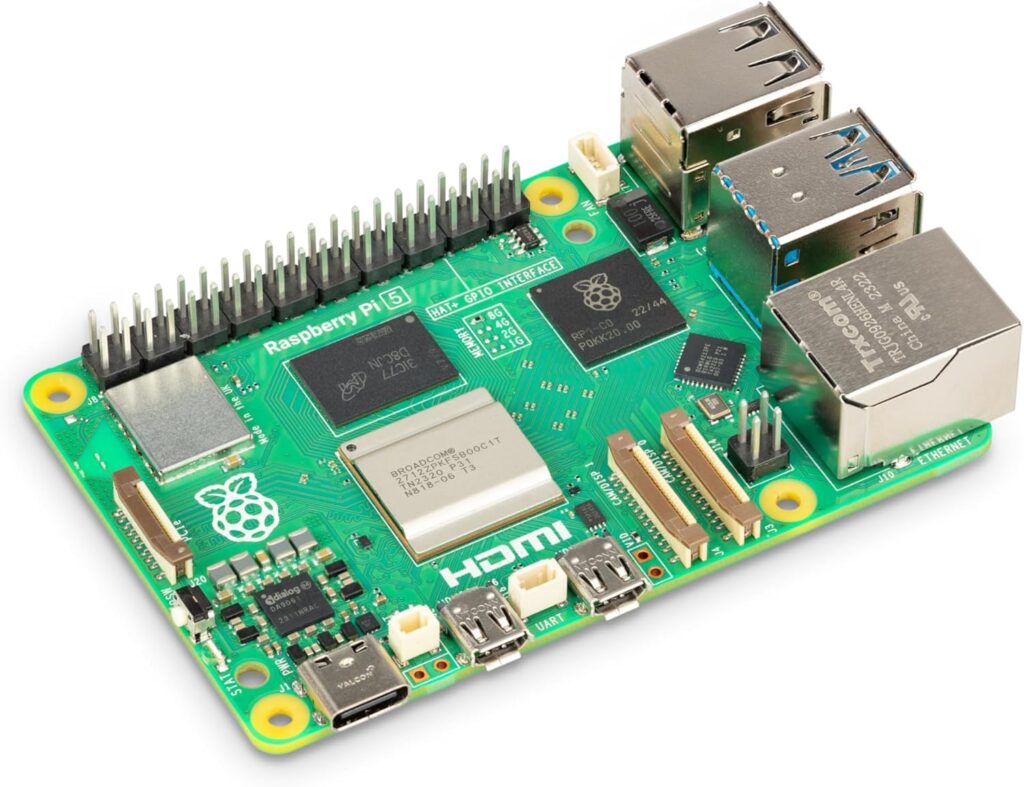
Microcontrollers are the heart of modern electronic devices. They act like small computers embedded inside machines to control specific tasks. From home appliances to smart devices and industrial systems microcontrollers play a crucial role in automation and control. A microcontroller is a single chip that contains a processor memory and input output peripherals which makes it compact efficient and cost effective.
There are different types of microcontrollers available today and each type is designed to meet specific performance and power requirements. Understanding these types helps beginners choose the right microcontroller for learning and projects.
Eight Bit Microcontrollers
Eight bit microcontrollers are the simplest form of microcontrollers. They process data eight bits at a time which makes them suitable for basic operations. These microcontrollers consume very little power and are inexpensive.
They are commonly used in simple devices like digital clocks remote controls basic calculators traffic light controllers and small toys. Popular examples include the 8051 microcontroller family and PIC sixteen series. Because of their simple architecture they are ideal for beginners who want to learn embedded systems fundamentals such as timers interrupts and input output control.
Sixteen Bit Microcontrollers
Sixteen bit microcontrollers are more powerful than eight bit controllers. They can handle larger data values and perform calculations faster which improves accuracy and control.
These microcontrollers are used in applications like washing machines air conditioners medical instruments and motor control systems. They offer a balance between performance and power efficiency. Examples include the MSP four three zero series by Texas Instruments and PIC twenty four microcontrollers. These are often used in real time systems where timing precision is important.
Thirty Two Bit Microcontrollers
Thirty two bit microcontrollers are advanced and capable of handling complex tasks. They support high speed processing large memory advanced peripherals and modern communication protocols.
They are widely used in smart devices robotics automotive electronics and Internet of Things applications. ARM Cortex M series microcontrollers are the most popular in this category and are used by manufacturers like STMicroelectronics NXP and Microchip. These microcontrollers can run real time operating systems handle graphics encryption and wireless communication efficiently.
Low Power Microcontrollers
Low power microcontrollers are designed for battery operated and energy efficient applications. They use sleep modes and smart power management to extend battery life.
These microcontrollers are used in wearable devices wireless sensors smart meters and portable medical equipment. Examples include ARM Cortex M zero and MSP four three zero microcontrollers. Low power operation makes them ideal for devices that need to run for months or years without battery replacement.
Application Specific Microcontrollers
Some microcontrollers are designed for general purpose use while others are optimized for specific applications. General purpose microcontrollers are flexible and programmable for many tasks and are commonly used in development boards like Arduino.
Application specific microcontrollers are optimized for tasks like automotive control digital signal processing or power management. They offer better efficiency for their intended use but less flexibility for other tasks.
Comparison Table of Microcontroller Types
| Feature | Eight Bit | Sixteen Bit | Thirty Two Bit |
|---|---|---|---|
| Data handling | Eight bits | Sixteen bits | Thirty two bits |
| Processing speed | Low | Medium | High |
| Memory capacity | Small | Medium | Large |
| Power usage | Very low | Low | Moderate |
| Cost | Low | Medium | Higher |
| Common uses | Simple devices | Control systems | Smart electronics |
| Popular examples | 8051 PIC sixteen | MSP four three zero | ARM Cortex M |
Which Microcontroller Is Best for Beginners
For beginners eight bit microcontrollers are great for learning basic concepts. Those interested in real world control systems can move to sixteen bit microcontrollers. If the goal is to work on modern smart devices and Internet of Things projects learning thirty two bit microcontrollers is highly beneficial.
Development platforms like Arduino STM thirty two and ESP thirty two provide excellent learning resources and community support.
Conclusion
Microcontrollers are essential components in embedded systems and modern electronics. Each type of microcontroller serves a specific purpose based on performance power and application needs. By understanding the different types of microcontrollers and their uses beginners and developers can make better choices and build efficient electronic systems with confidence.